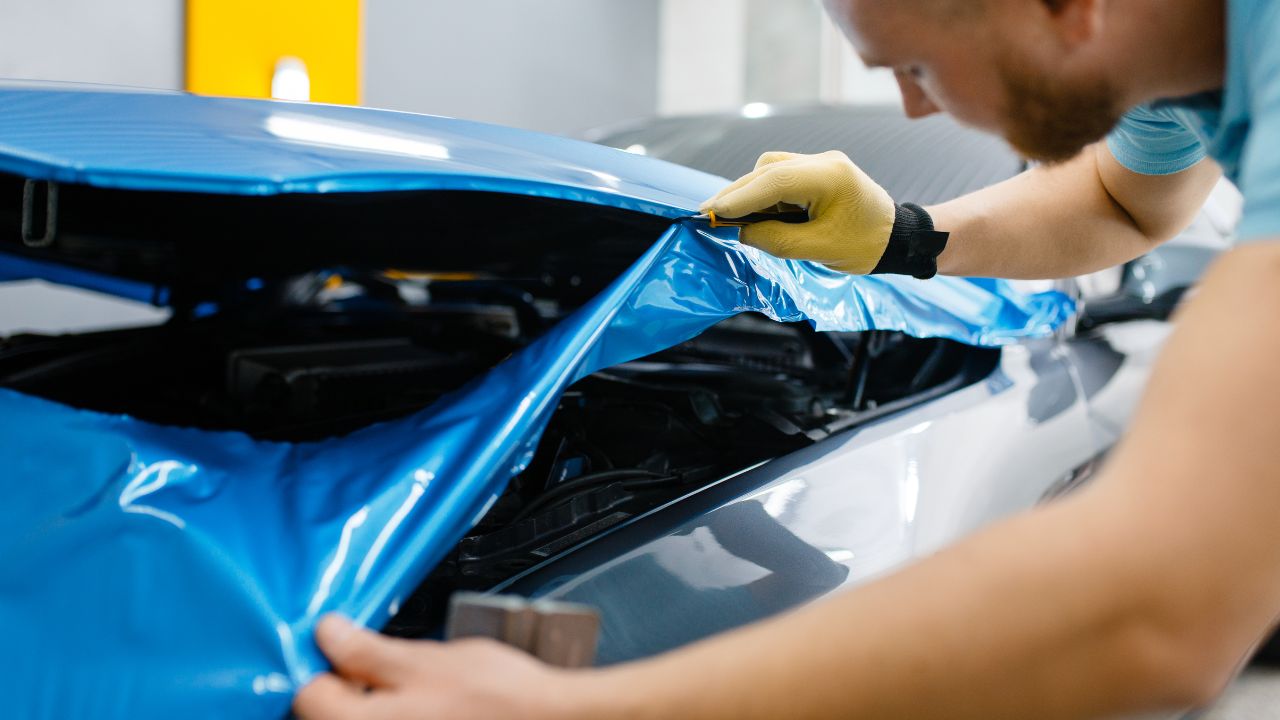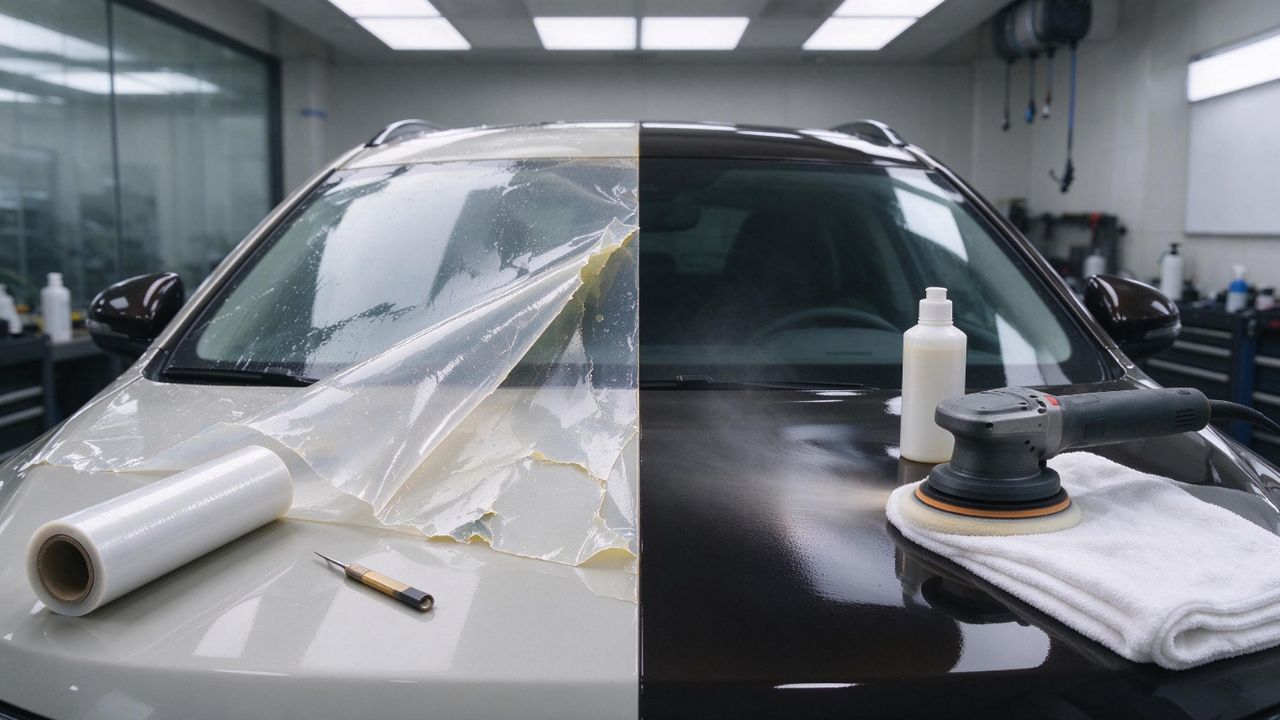

When you choose the right option for your business, you need to consider more than appearance. Your customers may have different expectations for style, protection, maintenance, and installation. Understanding these differences can help you build the right product portfolio, reduce service issues, and meet demand across different vehicle markets.
Gloss PPF vs Matte PPF Overview

The key difference in matte PPF vs gloss PPF is the final surface appearance. Gloss PPF preserves or enhances the original paint’s shine, while Matte PPF creates a lower-gloss matte or satin finish. Both options can provide TPU-based paint protection, but they serve different aesthetic and market needs.
What is Gloss PPF?
Gloss PPF is a transparent paint protection film designed to preserve a vehicle’s original colour whilst maintaining or enhancing its gloss finish. Once applied, its surface finish is visually very similar to the original factory paintwork, making it particularly suitable for vehicles where maintaining a clear, high-gloss appearance is a priority.
What is Matte PPF?
Matte PPF alters the appearance of a glossy paint finish by creating a uniform matte or satin effect. It is suitable for vehicles where a more distinctive look is desired, or where a match to the original factory matte paint colour is required. This low-gloss finish also helps to make minor paintwork imperfections less noticeable.
Gloss vs Matte PPF: Key Differences
| Factor | Gloss PPF | Matte PPF |
| Appearance | High-gloss | Matte/satin |
| Original Paint Appearance | Preserves original gloss | Changes surface appearance |
| Surface Texture | Smooth/glossy | Diffused/textured |
| Scratch Visibility | Minor scratches may be more visible | Minor imperfections are less noticeable |
| Cleaning | Generally easier | Requires compatible care products |
| Customization | Moderate | High |
| Typical Applications | Daily driving, new vehicles, luxury cars | Customization, modified cars, show vehicles |
Gloss PPF vs Matte PPF: Performance and Applications
Gloss PPF
Key Features
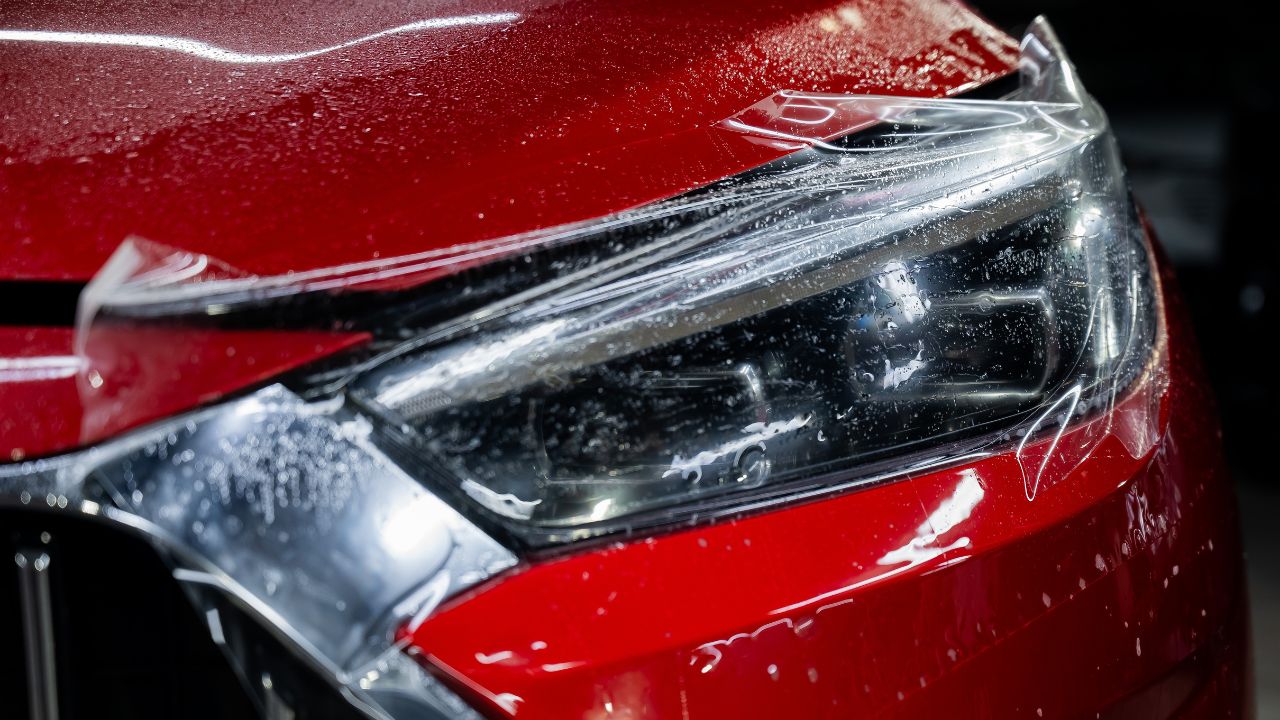
High-gloss PPF combines high transparency with a high-gloss finish, clearly showcasing the original paintwork. Its surface layer typically features self-healing properties, effectively addressing minor scratches, while its hydrophobic surface helps to reduce the build-up of dirt and water marks. When purchasing, attention should be paid to the initial gloss value, the temperature at which the self-healing effect takes effect, and the consistency between batches.
Applications
Gloss PPF is suitable for vehicles where the owner wishes to maintain or enhance the gloss of the original factory paintwork. The gloss-enhancing effect is most pronounced on dark-coloured and metallic-finish models, making gloss black PPF a practical option for customers who want to retain or enhance a deep black appearance. New cars or vehicles that have recently been repainted constitute the primary target customer base for Gloss PPF, as owners of such vehicles place high importance on the integrity and visual appeal of the paintwork. From a procurement perspective, Gloss PPF is a core product in the range. With stable market demand, it is well-suited as a key SKU.
Matte PPF
Key Features
Matte PPF features a diffuse-reflective surface, producing a uniform, low-gloss finish while minimising the visual prominence of minor imperfections. Compared to gloss PPF, its surface is more prone to showing fingerprints and oil marks. Therefore, the use of specialised cleaning products is recommended. Ordinary waxes or polishes may alter the texture of the matte surface. When purchasing, priority should be given to materials with a uniform surface texture, consistent colour control and stable quality across batches.
Applications

Matte PPF is suitable for vehicles where a bespoke matte finish is desired. For example, applying matte PPF to a black car to transform a glossy black paint finish into a more distinctive look. Matte PPF can make minor surface imperfections less visually noticeable.
However, the original paintwork must still be thoroughly assessed and prepared prior to installation. When sourcing this product, you may consider launching it as a differentiated offering to satisfy high‑end customisation demands. Matte PPF can support a higher selling price in some premium and customization markets, particularly when the product offers consistent surface texture and reliable installation performance.
How to Choose Gloss PPF or Matte PPF
Target Market
Gloss PPF is aimed at car owners who wish to maintain the factory finish or enhance the texture of their paintwork. It is particularly suitable for new cars, luxury models and vehicles with dark-coloured paintwork. This customer base is the broadest and has the most stable demand.
Matte PPF, on the other hand, is aimed at car owners seeking a matte finish or wishing to match their vehicle’s original matte paintwork. It is commonly chosen by owners of sports cars, modified vehicles and show cars.
While there is some overlap between the customer bases for the two products, their motivations differ. You can determine which to recommend by listening to the customer’s description of how they use their vehicle.
Product Positioning
Gloss PPF is well-suited as a core product category, with high market demand and broad appeal. It is the mainstay product for building customer trust and ensuring a stable cash flow. Matte PPF, on the other hand, is best positioned as a high-end, differentiated product. With a higher average transaction value and relatively less competition, Matte PPF can also support a higher matte PPF price when the product offers consistent surface texture, reliable installation performance, and differentiated appearance.
If your client base consists primarily of everyday drivers, Gloss PPF is the safer choice. However, where modification or high-end bespoke work is involved, Matte PPF offers an effective way to increase profit margins.
Installation Requirements
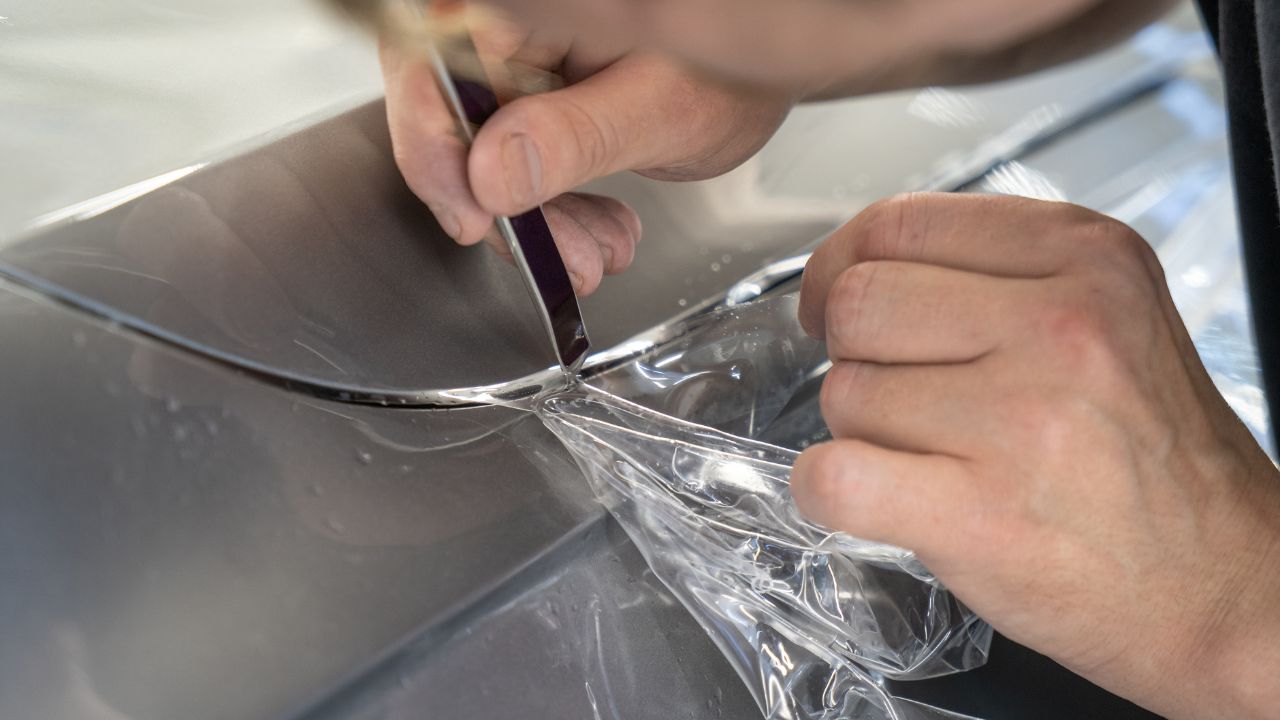
The installation processes for both products are essentially the same. However, Matte PPF places higher demands on the cleanliness of the installation environment, as dust particles and fine scratches are more noticeable on its matte finish than on the Gloss version.
Furthermore, the film should not be stretched excessively after installation, as this may affect the uniformity of the matte finish. You should assess whether to introduce Matte PPF based on the precision of your team of technicians, or provide targeted training to reduce the rate of rework.
Product Portfolio
Introducing both Gloss and Matte PPF will enable you to meet a wider range of market demands. You can maintain stable sales of Gloss PPF as your core SKU, while using Matte PPF as a high-margin, differentiated product to complement your product range. The two will complement rather than replace one another within your product portfolio. When sourcing, we recommend testing the market’s acceptance of Matte PPF with a small number of SKUs initially, and then gradually expanding the product range based on customer feedback.
Customer Demand
A customer’s choice between a gloss or matte finish is usually directly linked to how the vehicle is used. Owners who use their cars for everyday commuting tend to prioritise ease of cleaning and resale value, and therefore favour Gloss PPF. By contrast, customers who use their vehicles for display or wish to express their individuality tend to favour the distinctive texture of Matte PPF.
You should guide your recommendations by understanding the customer’s driving habits and aesthetic preferences, rather than making the choice for them. Both types of demand are very real and are on the rise.
FAQs
What Should You Consider Before Adding Matte PPF to Your Product Line?
Before purchasing a matte PPF, one should assess the surface uniformity, consistency of the finished product, installation performance and maintenance requirements. Check that the matte texture remains consistent across the entire film and that the product performs reliably during installation, avoiding excessive stretching or noticeable surface variations. Before placing a bulk order, one should also confirm the supplier’s quality control processes, warranty terms and consistency between batches.
Can Gloss PPF and Matte PPF Share the Same Product Specifications?
Yes, but this is limited to the substrate and adhesive layers. The topcoat formulation usually needs to be adjusted. The same TPU substrate can be used to produce both glossy and matte surface finishes using different topcoat processes, while maintaining consistent thickness, tensile strength and self-healing properties. When purchasing, you may request that the supplier provide both finishes based on the same substrate system to ensure consistency in performance metrics other than appearance.
Can Gloss and Matte PPF Be Supplied Under a Private Label?
Yes. Most PPF manufacturers provide OEM customisation services. Both gloss and matte finish films can be custom‑made with branded logos on the backing liner, bespoke packaging designs and adjusted product specifications to meet brand‑owner requirements. Some suppliers also support a unified branding system for both finishes. When procuring, it is necessary to confirm whether the supplier has stable production capacity and the ability to ensure batch consistency when supplying both finishes simultaneously.
What Quality Controls Are Important for Consistent PPF Surface Finish?
Gloss uniformity is a key indicator. For Gloss PPF, batch-to-batch gloss consistency can be evaluated using a gloss meter. For MattePPF, suppliers should also control surface texture, haze, and visual uniformity to maintain a consistent finish. Controlling the surface roughness of matte films is equally important, as excessive variation can result in inconsistent visual texture. When purchasing, suppliers should be required to provide gloss or surface roughness test data for each batch to ensure consistent visual appearance across different batches of the same product.
How Can You Evaluate Gloss and Matte PPF Samples Before Bulk Orders?
It is recommended to apply both types of film to the same curved panel to observe the differences in gloss and surface texture. Under lighting conditions, check for any orange peel effect or graininess, and feel the surface with your hand to assess its smoothness. For matte films, also check for fingerprint marks to determine whether a specialised cleaning agent is required. Expose the samples to the outdoors for a period of time to observe whether their resistance to yellowing is consistent.
What Warranty Terms Should You Expect From a PPF Supplier?
The standard warranty should cover yellowing, delamination and adhesive failure, with a warranty period typically ranging from 5 to 10 years. Warranty documentation must clearly state all exclusions. Claims arising from improper installation, accidental damage or the use of unapproved cleaning agents will not be covered. Always check whether warranty terms for matte finish films match those for gloss films. Some suppliers enforce stricter yellowing‑related warranty conditions for matte products.
Final Thoughts
Ready to expand your PPF product range? Contact us to discuss gloss and matte PPF options, private labeling, specifications, MOQ, and packaging. Get product samples and a tailored quotation for your market, and build a reliable PPF supply solution for your business.