Choosing the wrong film can cost your business more than the price difference. A film that does not match your installation process or project requirements can lead to longer installation time, higher material waste, and additional after-sales work. This guide compares colored PPF and vinyl wrap to help you understand their differences and choose the right option for your business.
What Is Colored PPF
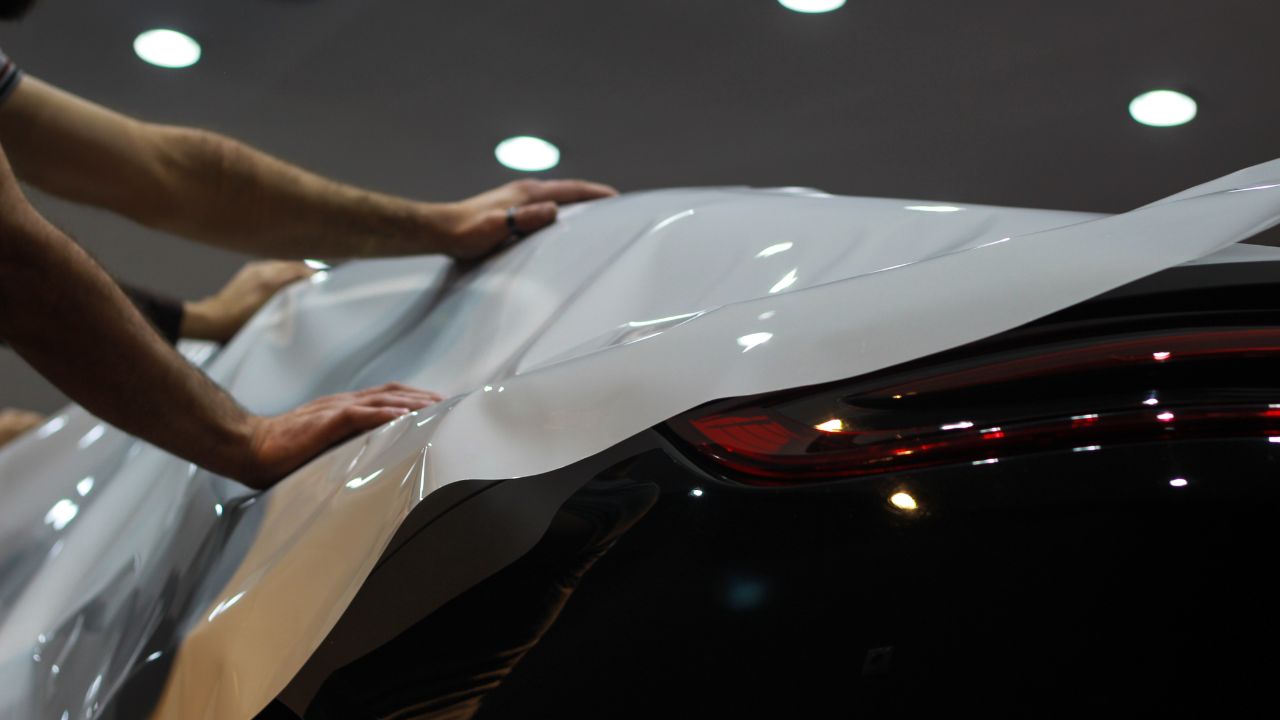
Colored PPF (Paint Protection Film) is a colored TPU film that combines a color layer with the structure of paint protection film. It typically consists of a TPU base, colored layer, topcoat, adhesive layer, and release liner.
When you offer colored PPF, this allows you to offer different colors and finishes in the same product category. Available options vary by product and may include Gloss, Matte, Satin, and Metallic finishes, along with different color effects.
What Is Vinyl Wrap
Vinyl wrap is a PVC-based film used to change the color and appearance of a vehicle. Its basic structure includes a PVC base, color or decorative layer, adhesive layer, and release liner.
For your product range, vinyl wrap can be offered in a wide selection of colors and finishes, with options like gloss, matte, satin, metallic, chrome, and textured surfaces. Depending on the product, you can also find different visual effects and color options for your customers.
Colored PPF vs Vinyl Wrap
Choosing between colored PPF and vinyl wrap involves more than comparing colors or finishes. They differ in protection, installation, cost, durability, and after-sales risks. The comparison below explains how each option performs in real-world use.
Paint Protection
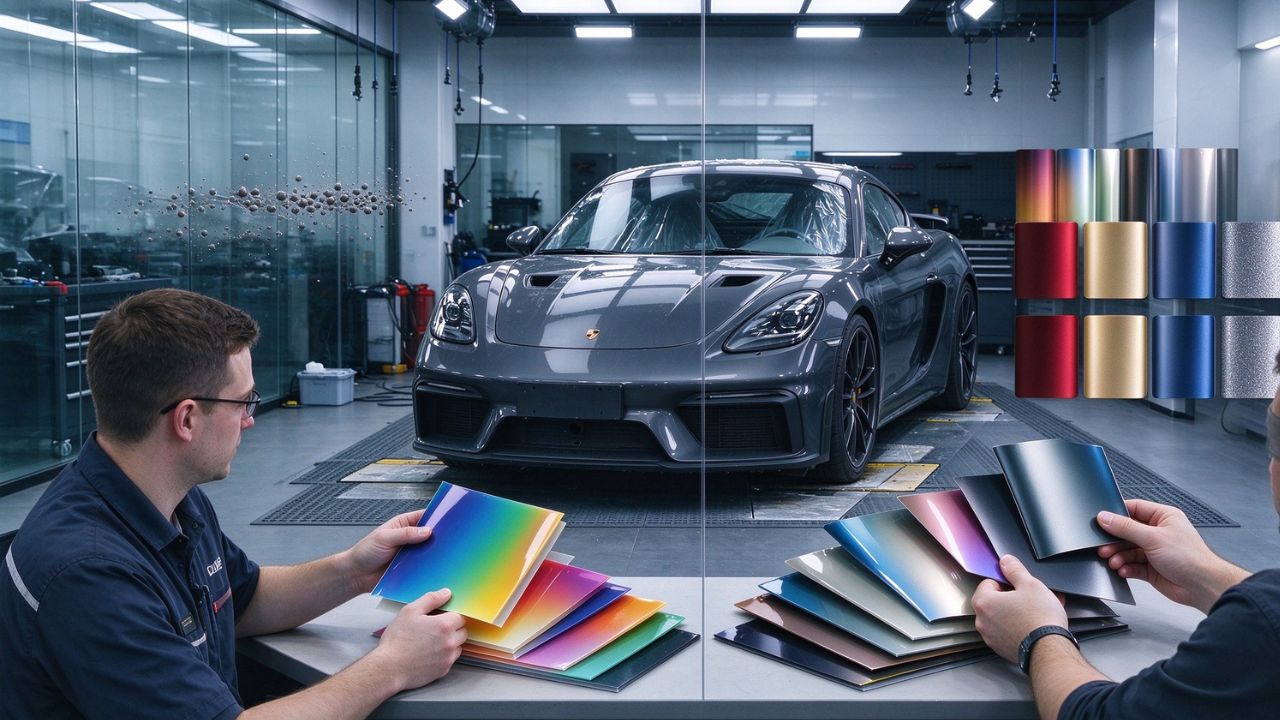
The biggest difference is the level of physical protection each film can provide. Colored PPF gives you a thicker protective layer that can absorb more of the minor impact from stone chips and everyday contact, while its self-healing topcoat helps reduce the visibility of light scratches. Vinyl wrap mainly acts as a surface layer, so it can help protect against light scratches and daily wear but offers much less protection from impacts.
This difference matters when you define the protection level of a job. With colored PPF, you are adding color without giving up the protective function of a PPF layer. With vinyl wrap, the color change remains the primary function, while the level of physical protection you get is more limited.
Material Properties
The material construction affects how the film handles during installation. Colored PPF usually uses a TPU base and is 7.5 mil thick, making it thicker than vinyl wrap while still offering good flexibility and elongation.
Vinyl wrap is commonly PVC-based and around 2–4 mil, so you are working with a thinner film that feels and responds differently during handling.
You will also notice a difference in the film structure itself. The topcoat on colored PPF contributes to its surface performance, while the air-release adhesive commonly used on vinyl wrap helps you manage trapped air and positioning during application. These material differences become more noticeable as you handle, stretch, and shape the film.
Installation Difficulty
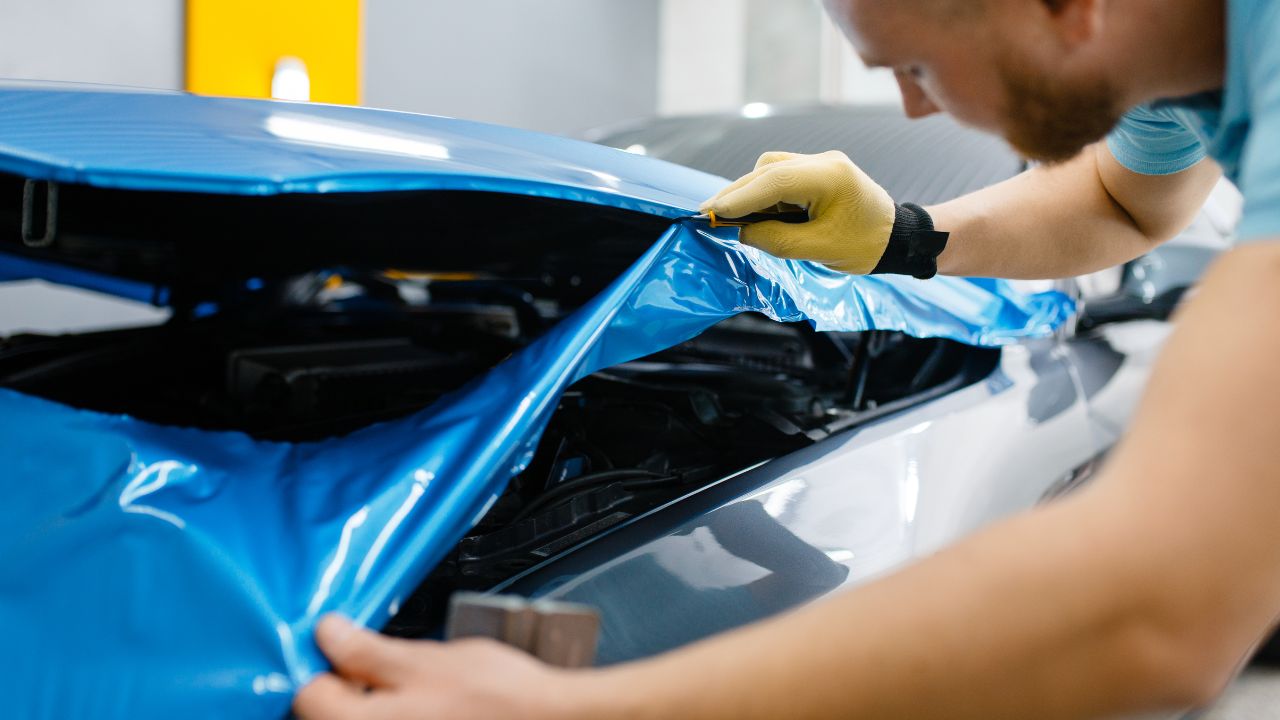
Film thickness and material behavior affect how much control you need during installation. Colored PPF has a thicker structure, so managing tension, stretching, and heat requires more precision around complex areas such as bumpers, mirrors, deep recesses, and wrapped edges. Excessive stretching can also increase the risk of shrink-back or edge lifting.
Vinyl wrap is thinner and generally easier to move and reposition during application. Its air-release adhesive can also make positioning and air removal more manageable. The difference becomes more noticeable when the film is applied to panels with complex shapes.
Installation Efficiency
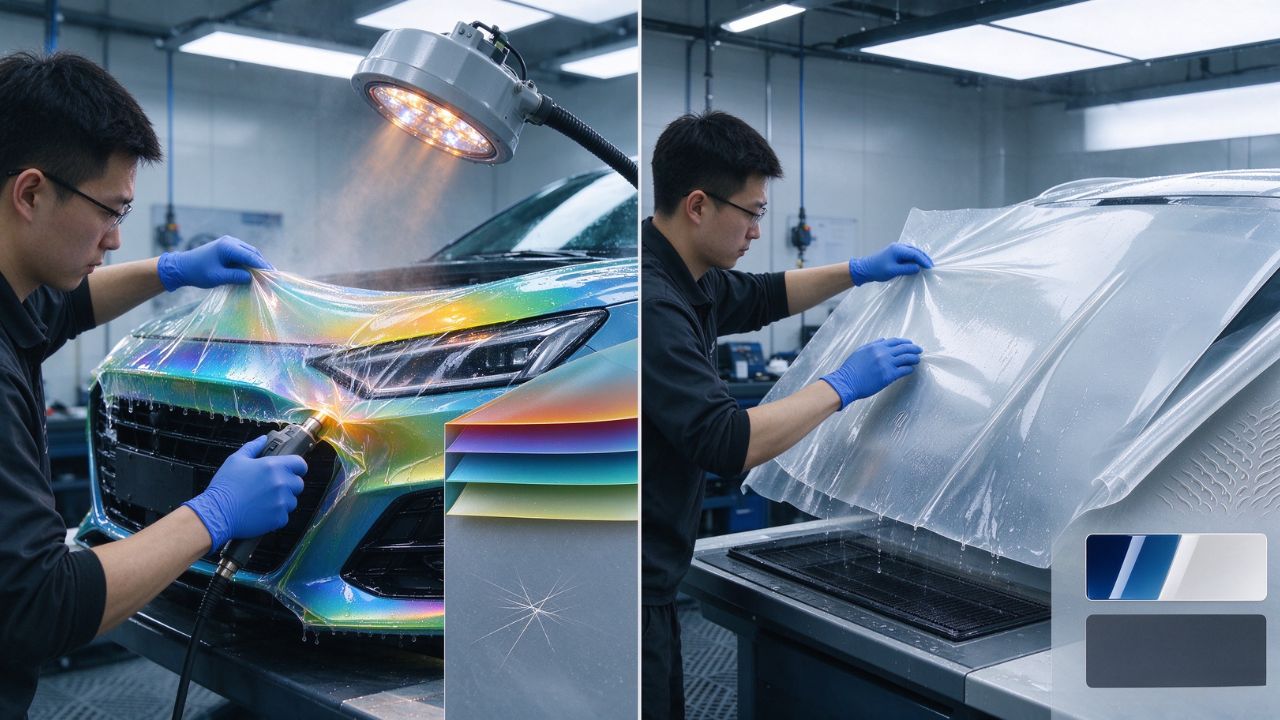
Vinyl wrap is generally easier to reposition during installation, which can make large panels and complex areas faster to handle. Colored PPF is usually thicker and may require more careful positioning and finishing.
You may find vinyl wrap more efficient when you prioritize fast color changes and high installation volume. You may need more installation time for colored PPF, but it combines color change with paint protection, which can increase the value of each job.
Material Waste
Material waste comes from cutting offcuts, incorrect measurements, damaged sections, and failed installation. The amount of waste depends on your cutting plan, panel shape, installation method, and how efficiently the film is used.
The financial impact can still differ between the two films. Colored PPF generally has a higher material value, so the same amount of wasted film can result in a higher loss. Vinyl wrap usually has a lower material cost, but repeated cutting errors or rework can still increase total consumption.
For your business, tracking actual film usage and waste per vehicle can give you a more accurate view of material cost than looking at the roll price alone.
Purchase Cost
The price difference starts with the materials and construction. Colored PPF generally costs more because you are paying for a TPU-based structure and additional film layers, while vinyl wrap is typically based on PVC and comes at a lower material cost.
But the price on the quotation is not the only number you need to look at. When you compare suppliers, check the roll size, material quantity, MOQ, and shipping cost together so you can see what you are actually paying for each usable roll.
Durability
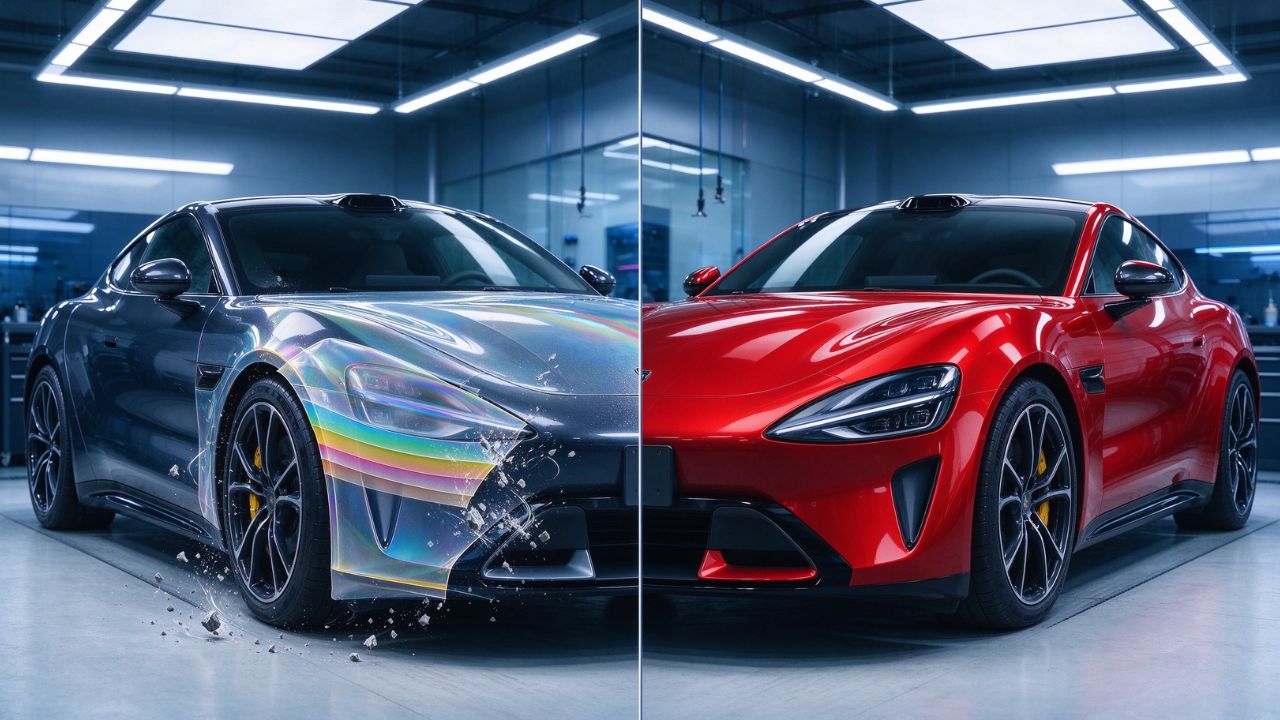
Long-term performance depends on more than the film category. Colored PPF generally provides stronger resistance to UV exposure, weathering, fading, and staining. Vinyl wrap can also provide long-term color and surface performance, but its resistance varies more noticeably with product quality, climate, UV exposure, installation, and maintenance.
For completed jobs, this means you should communicate the expected service life of Colored PPF or vinyl wrap clearly with your customers before installation. The actual lifespan can vary by product and application conditions, so use the supplier’s stated service life and warranty terms as a reference when setting customer expectations.
After-Sales Risks
Colored PPF may involve higher after-sales costs because a material issue can affect both appearance and paint protection, while vinyl wrap mainly requires restoring the wrapped surface. For either film, you should review the installation condition, application process, and film batch before accepting a claim. Clear warranty terms should define whether replacement material, rework, and labor are covered.
Quick Comparison
| Feature | Colored PPF | Vinyl Wrap |
| Base Material | TPU | PVC |
| Thickness | 7.5 mil | 2–4 mil |
| Protection | Superior stone-chip & scratch protection, self-healing | Minimal impact protection |
| Flexibility | High (Excellent elongation) | High(Good conformability, limited stretch) |
| Installation | More demanding | Easier |
| Cost of Waste | Higher | Lower |
| Material Cost | Higher | Lower |
| Durability | Generally longer | Generally shorter |
| Finish Options | Gloss, Matte, Satin, Metallic | Gloss, Matte, Satin, Metallic, Chrome, Textured |
| After-Sales Risk | Edge lifting, color matching, adhesive issues | Edge lifting, shrinkage, fading, peeling |
How to Choose the Right Film for Your Business
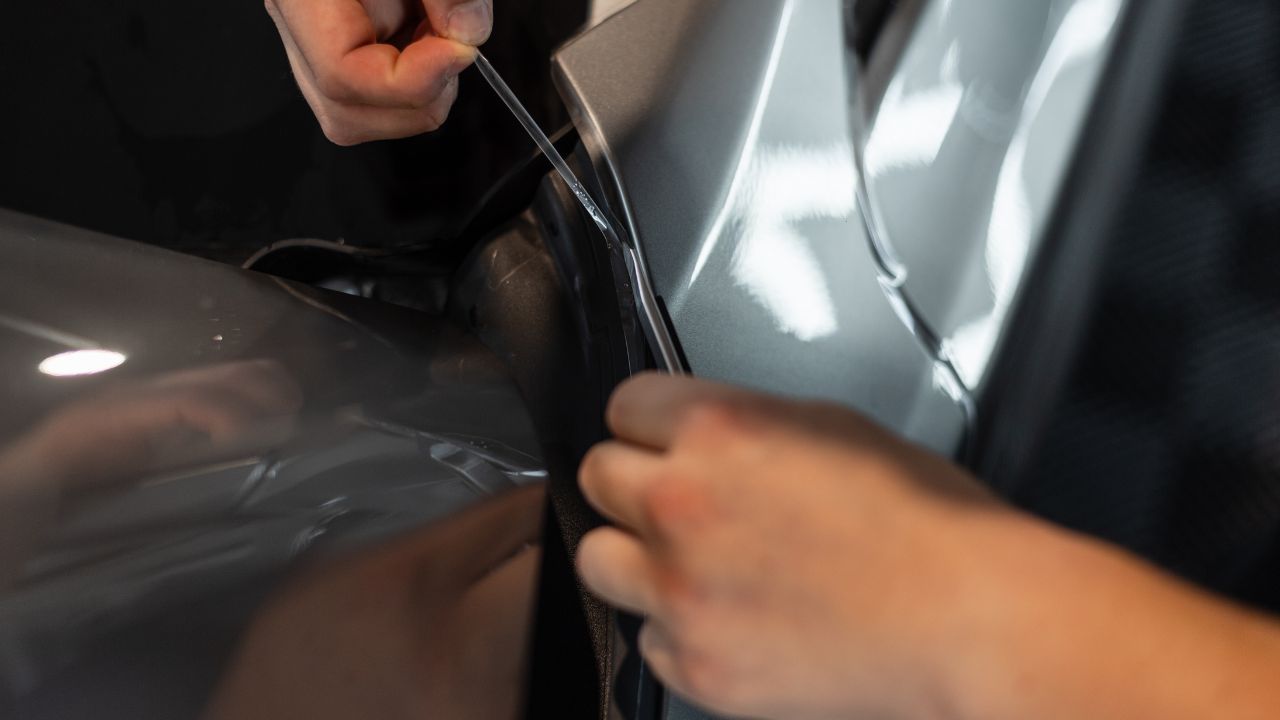
The right choice depends on how the film fits into your business model rather than one product being better in every situation.
Consider Your Service Mix
A business focused on color-change installations may need a broader range of finishes and visual options, while a business that handles protection-focused projects may place more value on colored PPF.
Consider Your Profit Potential
Colored PPF allows you to add paint protection value to color-change services, making it suitable for businesses looking to increase project value and expand premium services. Vinyl wrap is more suitable for businesses focused on fast color changes, broad color selection, and high installation volume.
Consider Your Customer Demand
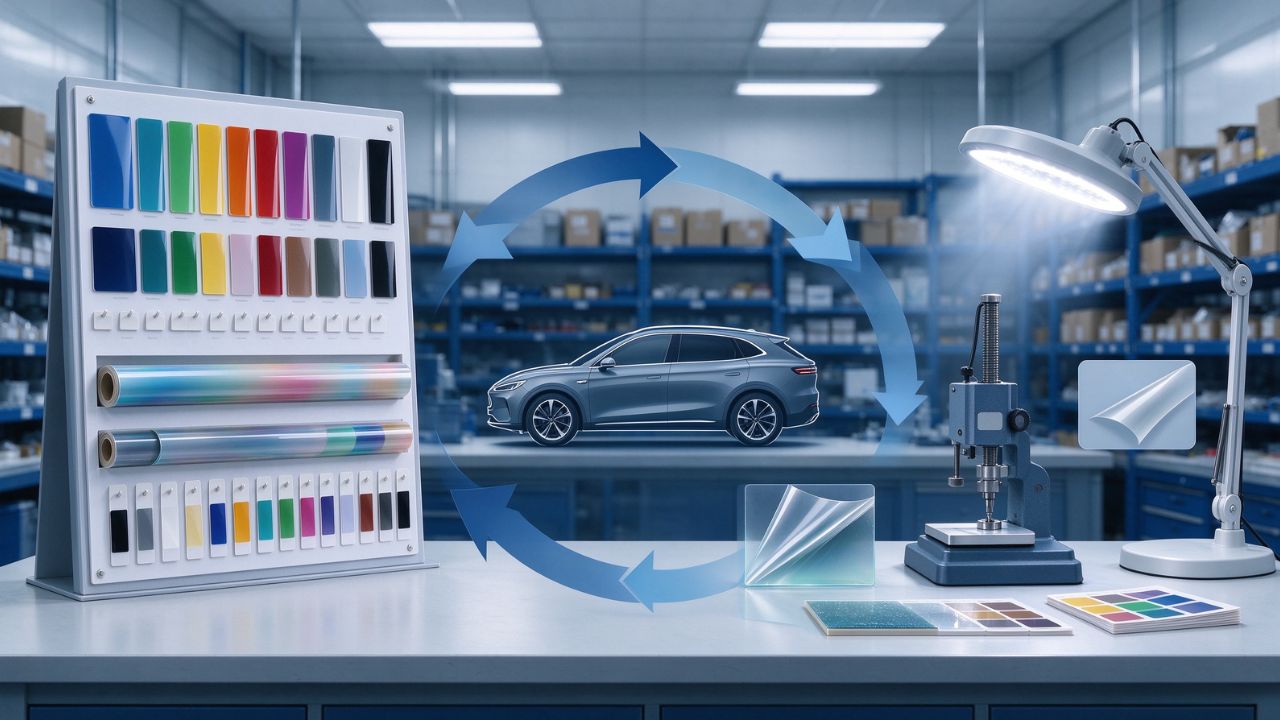
Review the types of projects you receive most often instead of stocking products based only on market trends. Your existing order data can help you decide which film types, colors, and finishes are worth keeping in regular stock.
Consider Your Product Range
If you already offer clear PPF, adding colored PPF can expand your protection-focused range. If your business already carries multiple vinyl wrap colors, adding colored PPF may require a different product positioning and inventory strategy.
FAQs
Can Colored PPF and Vinyl Wrap Be Used on the Same Vehicle?
Yes. You can use the two films on different areas of the same vehicle when the project requires different finishes or functions. For example, colored PPF can be used on selected panels while vinyl wrap is applied to other areas for graphics, branding, or visual accents.
How Can You Manage Multiple Colored PPF Colors in Inventory?
Managing multiple colored PPF colors requires clear SKU and inventory tracking. Assign each color and finish a unique product code, and record the roll quantity, dimensions, and batch information for each SKU.
What Are the Packaging Requirements for Colored PPF and Vinyl Wrap?
Both colored PPF and vinyl wrap should be packaged to protect against moisture, dust, scratches, creasing, and roll deformation during transportation. The packaging should also identify the film specifications, color, batch, and quantity for easier storage and inspection.
What Should You Confirm Before Placing a Colored PPF or Vinyl Wrap Order?
Before ordering colored PPF or vinyl wrap, confirm the film type, color or finish, dimensions, thickness, roll length, quantity, packaging, and delivery requirements. For bulk orders, also confirm batch consistency, warranty terms, and after-sales responsibilities to avoid specification or quality disputes after delivery.
How Should You Store Colored PPF and Vinyl Wrap?
Keep both films in their original packaging and store them in a clean, dry environment away from direct sunlight and excessive heat. Proper storage helps you maintain the condition of unused rolls before they are sent for installation.
Final Thoughts
Still comparing Colored PPF and vinyl wrap or unsure which film fits your business? WrapMasterPPF can help you evaluate film materials, specifications, finishes, and product options based on your applications and business needs. Contact our team to discuss your requirements and find the right film solution for your business.