
Hydrophobic PPF film offers more than water-repellent performance. Long-term value depends on hydrophobic durability, surface quality, installation performance, and product consistency. Understanding these factors helps you evaluate products more accurately and choose the right hydrophobic PPF for your market and customers.
What Is Hydrophobic PPF?
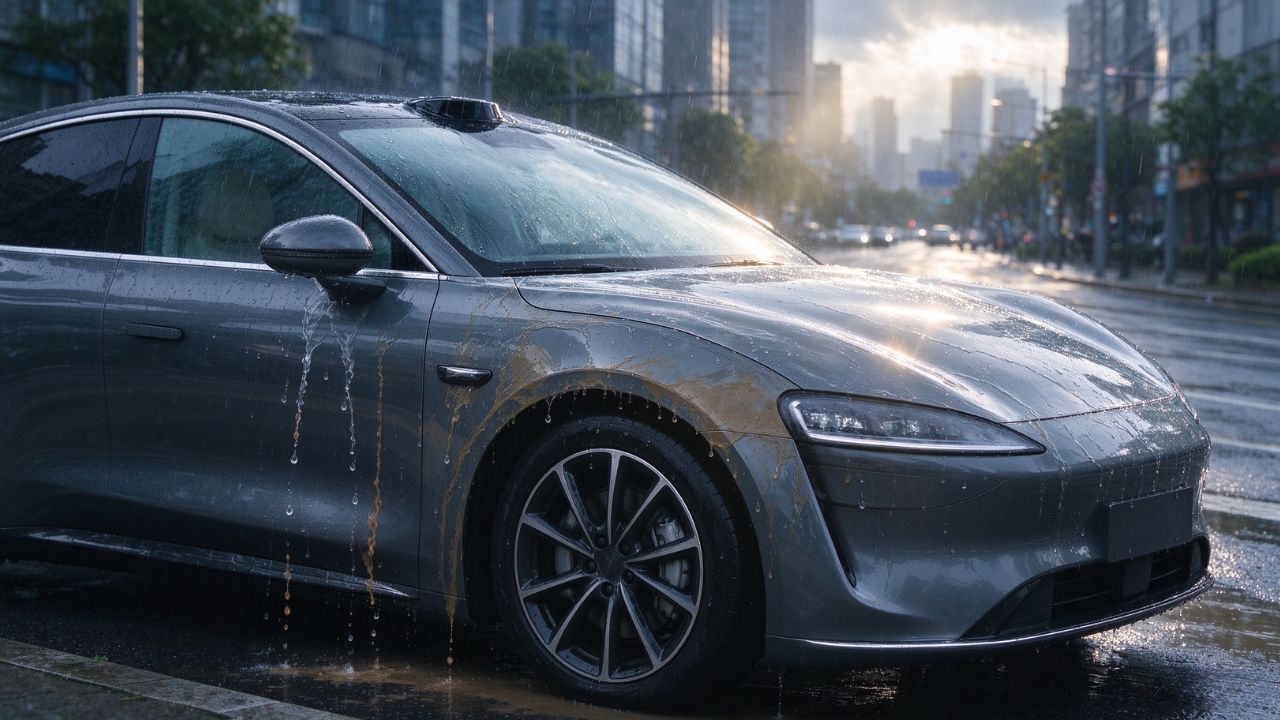
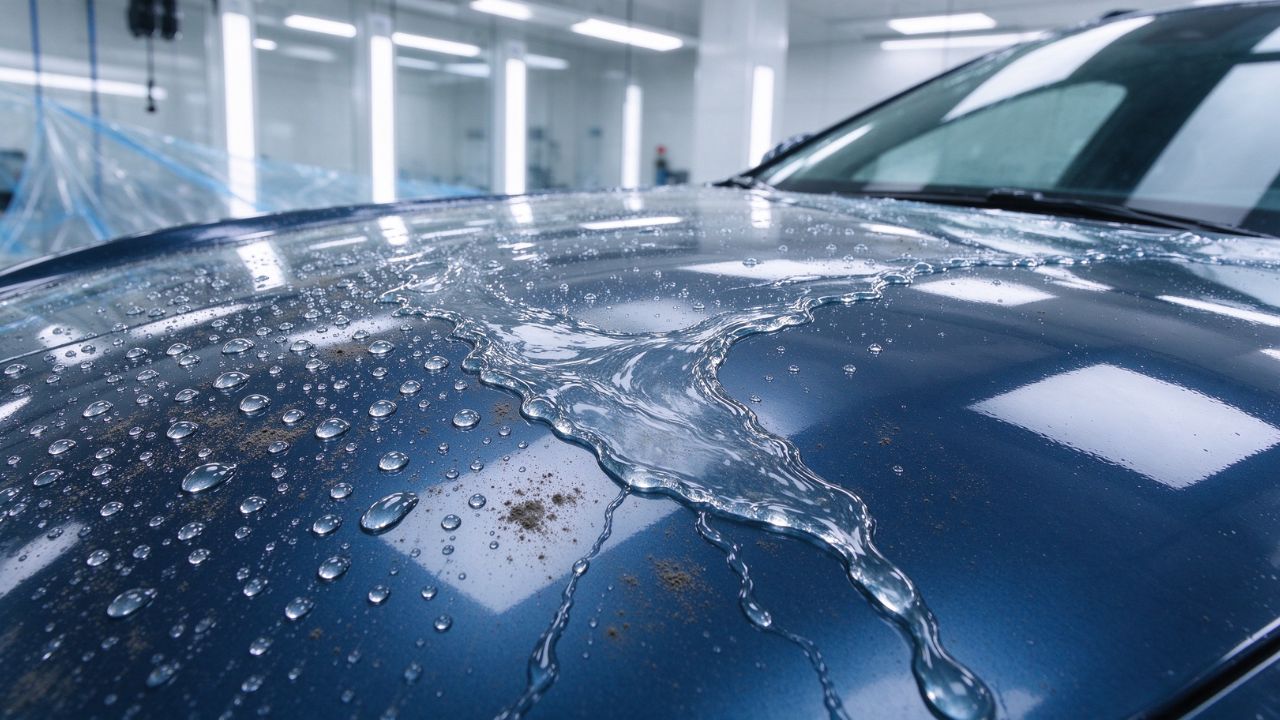
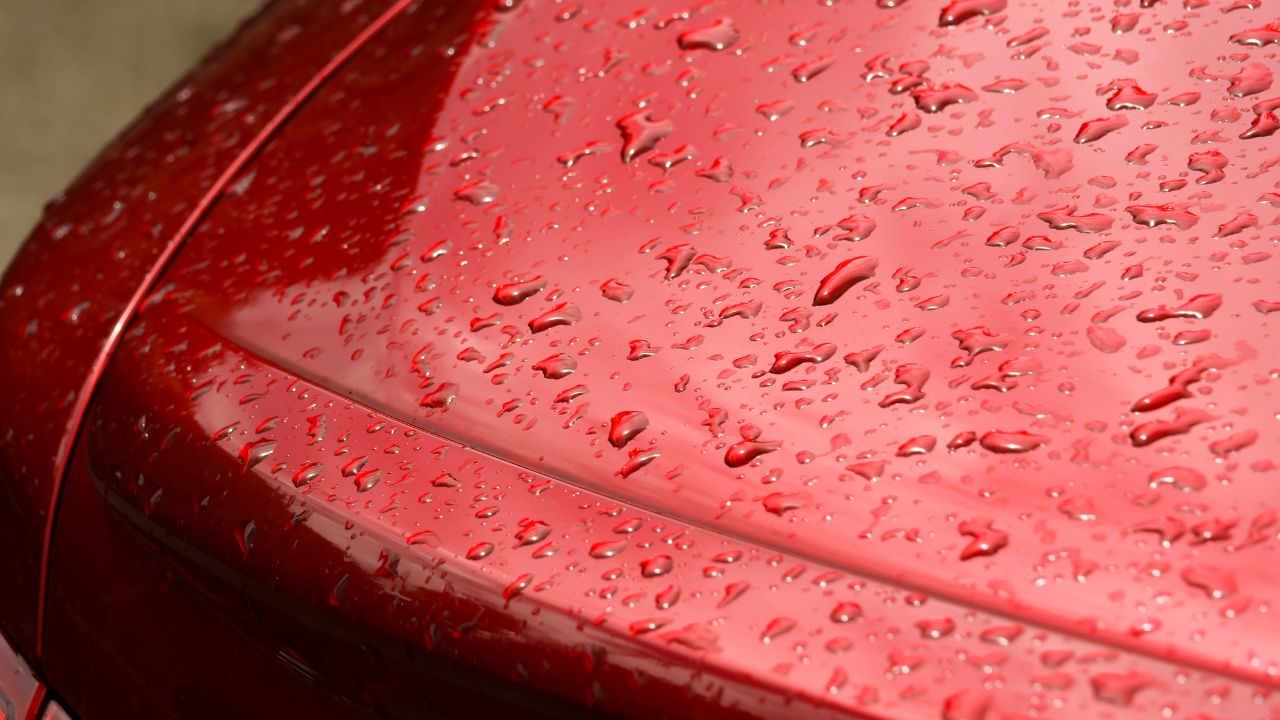
Understanding the hydrophobic PPF meaning starts with its surface chemistry and water-repellent behavior. Hydrophobic PPF is a TPU-based paint protection film with a specially formulated top coat that reduces surface energy and improves water repellency. When rainwater or muddy water comes into contact with the film’s surface, water droplets form round, plump spheres rather than spreading into a flat film.
They quickly roll off, carrying away any adhering dust and contaminants, achieving a self-cleaning effect similar to that of a lotus leaf. Compared to traditional PPF, hydrophobic PPF significantly reduces the buildup of dirt and the frequency of car washes.
Hydrophobic PPF Performance and Benefits
Hydrophobicity and Water Repellency
The key to hydrophobicity lies in the low surface tension of the topcoat. A higher water contact angle generally indicates stronger water repellency. When rain falls on the film surface, the water does not form a continuous film but instead coalesces into round droplets that roll off quickly, thereby removing dust and dirt adhering to the surface. Even after driving in the rain, the vehicle’s body remains relatively clean. This reduces the hassle of frequent car washes and lowers the risk of paint corrosion caused by acid rain and water stains.
Some products are marketed as super hydrophobic PPF, but the term itself is not a standardized performance grade. You should select products based on the contact angle test data provided by the supplier, as this data is the most direct and objective indicator for verifying hydrophobic performance.
Chemical and UV Resistance
The topcoat of hydrophobic PPF not only imparts hydrophobic properties to the material but also effectively resists chemical corrosion and UV radiation. High-quality products should resist chemical attack from contaminants such as acid rain, bird droppings, tree sap, and road salt, helping protect the underlying paint surface from prolonged exposure. At the same time, the addition of UV absorbers helps delay the aging and yellowing of the coating.
These properties directly impact the product’s service life and warranty risks. Damage to the film surface caused by chemical corrosion is one of the primary causes of post-sales complaints. Prioritizing suppliers with proven topcoat formulations can significantly reduce disputes that may arise later.
Surface Cleanability
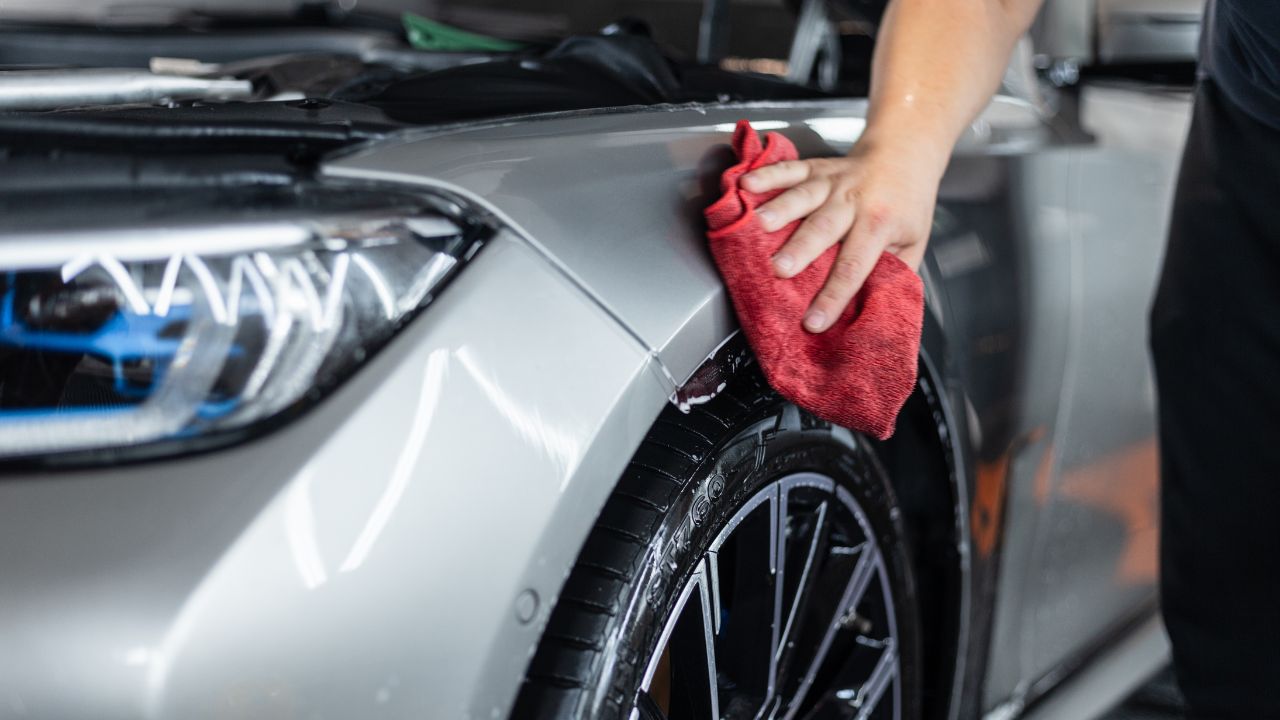
The low-adhesion properties of hydrophobic PPF prevent dirt from sticking. For daily cleaning, simply rinse with water or wipe with a neutral car wash solution to restore the surface to its original cleanliness. There is no need for vigorous scrubbing or harsh chemical cleaners. As a result, your installation center can reduce maintenance costs and minimize the number of times customers return for re-cleaning. At the same time, simple daily maintenance makes car owners more likely to recommend the product to others.
During installation and delivery, highlight the ease of daily cleaning of hydrophobic PPF as a key selling point. This allows customers to more intuitively recognize the product’s practical value over the long term.
Optical Clarity and Gloss Retention
A hydrophobic coating should not come at the expense of optical clarity. High-quality hydrophobic PPF offers light transmittance comparable to that of standard clear PPF, moderately enhancing the depth and gloss of the paint finish to make the vehicle’s color appear richer and more vibrant. Surface flatness also affects the longevity of the gloss. Low-grade hydrophobic coatings may cause light scattering due to microscopic surface roughness, thereby reducing visual clarity.
When selecting PPF for high-end vehicles, optical performance is the most direct and obvious factor. Only by choosing products that have passed rigorous testing can you differentiate your product from lower-priced competitors in the high-end market.
Key Buying Factors for Hydrophobic PPF
TPU Quality and Film Structure
The TPU substrate is crucial to the impact resistance and durability of hydrophobic PPF. When sourcing materials, you should take particular care to verify the origin of the raw materials. Aliphatic TPU from leading suppliers offers greater stability in terms of yellowing resistance and tensile properties.
The multi-layer structure is equally important. The topcoat provides hydrophobic properties and, depending on the product formulation, may also offer self-healing capabilities. The synergy between the layers determines the product’s overall performance.
You should select suppliers who can clearly specify the origin of each layer of material, as this generally ensures more reliable quality control.
Film Thickness and Optical Quality
Film thickness is directly related to impact resistance, but thicker is not necessarily better. Common PPF thickness options are designed to strike a balance between protective performance, fit, and installation efficiency. Excessively thick film significantly increases the difficulty of application on complex curved surfaces and reduces installation efficiency.
Optical transparency is equally important. Hydrophobic TPU PPF should possess a high light transmittance and gloss comparable to those of transparent PPF. Surface flatness affects both its resistance to soiling and its visual texture. These two factors directly influence your customers’ first impression of the product’s quality.
Hydrophobic Topcoat Durability
The durability of a hydrophobic coating directly affects how long the PPF’s hydrophobic effect lasts. High-quality products can maintain a stable contact angle even after thousands of car wash cycles, while retaining their stain-resistant and easy-to-clean properties.
When purchasing, you should request contact angle data from the supplier showing comparisons before and after accelerated aging tests, as this is the most direct indicator of the coating’s service life. Typically, customers notice a decline in hydrophobic performance before they observe yellowing. Prioritizing coating durability during product selection helps effectively mitigate potential post‑sales risks.
When evaluating the best hydrophobic PPF, coating durability should be assessed alongside chemical resistance, optical performance, adhesive reliability, and batch consistency rather than judged by initial water beading alone.
Adhesive and Installation Performance
The performance of the adhesive layer directly affects installation efficiency and long-term bond reliability. A high-quality adhesive system should have low initial tack to facilitate positioning during installation. At the same time, the final bond strength must be sufficiently high to ensure that the edges do not curl or bubble during long-term use.
Removability is equally important and is one of the fundamental requirements. No adhesive residue should remain when the film is removed, and the clear coat must not be damaged.
Selecting a traceable adhesive supplier from a leading brand will help you minimise post-sales risks associated with adhesives.
Batch-to-Batch Consistency
Batch consistency is a mandatory requirement for large-scale procurement. High-quality suppliers must strictly enforce quality control over raw materials and adhere to standardised production processes to ensure that key performance indicators for each batch—including hydrophobicity, thickness and optical transparency—remain consistent.
Prior to procurement, you may request access to the supplier’s factory inspection records for specific batches and incorporate batch sampling standards into the contract terms. This can reduce the risk of quality issues at the source and prevent customer complaints.
Warranty and Supplier Quality Control
A clear warranty policy directly reflects a supplier’s confidence in the quality of its products. High-quality TPU-based PPF typically comes with a written warranty of 5 to 10 years, covering manufacturing defects such as yellowing, delamination, and adhesion failure. We recommend conducting an on-site inspection or requesting documentation of the supplier’s quality control processes before establishing a business relationship. This information will help you evaluate the product’s long‑term quality, stability, and reliability.
Hydrophobic PPF Buying Checklist
| Buying Factor | What to Check |
| TPU Quality | Material type and yellowing resistance |
| Hydrophobic Topcoat | Contact angle and durability |
| Adhesive | Tack, repositionability, and edge adhesion |
| Film Thickness | Thickness and consistency |
| Optical Quality | Clarity, haze, and gloss |
| Quality Control | Test reports and batch consistency |
FAQs
What Factors Affect the Price of Hydrophobic PPF?
Hydrophobic PPF price depends on TPU grade, coating formulation, film thickness, adhesive system, manufacturing consistency, and warranty coverage. Products made from Lubrizol or Covestro substrates are more expensive, but hydrophobic coatings with greater durability also drive up the price. You should calculate the total cost over a five-year service life, taking into account installation wastage and after-sales service risks. Do not simply compare the purchase price per roll. Products of consistent quality offer better value for money in the long term.
Is Hydrophobic PPF Suitable for Windshield Applications?
Hydrophobic PPF windshield applications require a film specifically engineered for automotive glass rather than standard paint protection film. Applying car window film to the windscreen may result in reduced light transmission or insufficient scratch resistance, making it unable to withstand frequent contact with the windscreen wipers. Products specifically designed for glass offer superior optical clarity and scratch resistance, effectively improving visibility when driving in wet weather. When making your selection, please ensure that the product is clearly labelled as suitable for glass to avoid customer complaints arising from an inappropriate choice.
Hydrophilic vs Hydrophobic PPF: Which Is Better?
Hydrophilic PPF allows water to spread evenly and form a thin film, preventing watermarks from forming once the droplets have dried. It is typically used for the day-to-day cleaning and maintenance of vehicles. Hydrophobic PPF, on the other hand, causes water to form beads that roll off, carrying dirt with them, and provides a self-cleaning effect on rainy days. When purchasing, the choice should be based on the user’s driving habits. Hydrophobic products are more suitable for everyday commuting.
What MOQ Is Typical for Wholesale Hydrophobic PPF?
The typical minimum order quantity for hydrophobic PPF is usually one roll, which is highly advantageous for buyers as it allows you to trial the product at a low cost and gauge market response. For OEM customisation, the minimum order quantity increases significantly, typically to 100 rolls or more. You can take advantage of the flexibility offered by small-batch purchasing to first verify product quality and market feedback before gradually scaling up your purchases. This is a relatively prudent procurement strategy.
Can Hydrophobic PPF Be Customized for Private Label Brands?
Yes. Most specialist PPF manufacturers offer services such as logo printing on the reverse side, bespoke packaging design and customised product specifications. Some suppliers can also optimise and adjust the performance of surface coatings to meet specific market positioning requirements. We recommend prioritising partnerships with factories that possess flexible production capabilities. These factories can ensure that the quality of small-batch custom orders remains consistent with that of large-scale mass production, helping you to establish a competitive advantage for your own brand.
Final Thoughts
Choosing the right Hydrophobic PPF can strengthen your product offering and meet growing demand for premium surface protection. If you need stable quality, customized solutions, or reliable bulk supply, our team can support your requirements. Contact us to discuss specifications, OEM options, pricing, and to request a sample for evaluation.